Having grown up in a Christian home, I was exposed to modesty culture. If you happen to have not heard of it, modesty culture (also part of purity culture) is basically this way of thinking in which women and girls are held responsible for the way their clothing causes men to act. In other words, they are expected to dress modestly and appropriately so they aren’t a source of sexual temptation to men.

I have a big problem with this. While I could go on to explain all my reasons, I have chosen not to because 1) there are already many blogs written about this which I think explain the reasons quite well and 2) my goal is to show you how this relates to Plato’s perception of truth instead of convincing you to agree with my side of the argument.
In short, Plato believed in absolute truth. This truth could be found in the world of forms, the noumenal world. In the textbook, Rhetoric and Human Consciousness, Craig R. Smith helpfully posits, “According to Plato, one of the great tensions in life is the battle between reason, which carries the soul back to the ideal, and the senses, which distract the soul and lead it to the phenomenal and material” (54). Plato also believed that “our earthly condition” distracts us from this “attainment of true knowledge from the noumenal world” (53).
While this may seem like somewhat of a stretch, Plato’s focus on this world and a type of perfect world, reminded me of the all too familiar Christian focus on Heaven. When I was growing up, I always heard the phrase, “be in the world, but not of the world”. This phrase was applied to everything from music, movies, food, and even clothing as a way of saying that good Christians have to be different and set apart.
Similar to the above phrase is a phrase that happens to be one of the cornerstones of those who support modesty culture: “Don’t be a stumbling block”. This phrase goes hand in hand with the idea that a woman’s/girl’s body is a temple. While these phrases do indeed have positive meanings, they are also used to promote the idea that women must dress modestly or else they will negatively impact their own personal journey and every man’s who sees them. Basically, women must not use their clothing or lack thereof, their sexual appeal, and the shape of their body to in anyway distract themselves or others from continuing on the faithful Christian walk towards Heaven, or in Plato’s words, to the world of absolute truth.
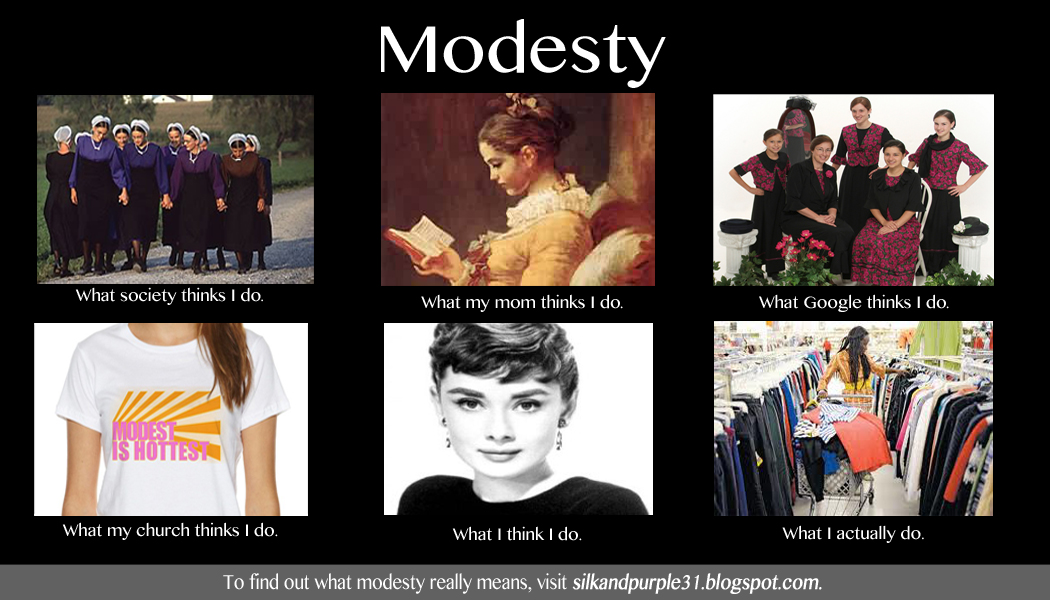
Interestingly, I think the argument between those who are for and against modesty culture also resembles Plato’s idea of the tension between reason and the senses. Per most arguments, proponents of both sides argue that they are appealing to reason whereas the other side is irrational or misinformed. Furthermore, both sides appeal to their rhetorical use, or arguable misuse, of the same key terms such as responsibility and shame.
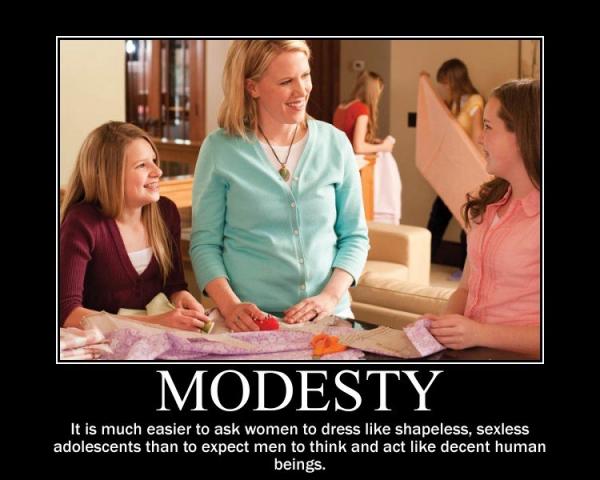
In the end, I’m not here to tell you which side you should be on. I know where I stand, and I know that reading Plato made me think of this topic. You may not like that I don’t give more of an answer to this debate, and that’s ok. I will leave you with one last meme…
 Notes in the Margins