Prominent rhetor, Kenneth Burke, contributed significantly to our current body of rhetorical theory. He believed that rhetoric is “an attempt to move others through the manipulation of symbols” (Smith 340). While there are numerous ways to manipulate these symbols and thereby construct reality, Burke was particularly concerned with how rhetors persuade others to act through “identification”. In other words, he examined how rhetors use motives to explore topics and present them in ways that give the audience a chance to identity with the rhetor’s argument (Smith 340-341). One of the ways that Burke discusses motives is through eulogistic and dyslogistic uses of languages. Eulogistic language characterizes something “in a cloak of admiration” whereas dyslogistic language characterizes something “in a cloak of negativity” (Smith 343). Exploring how rhetors do this can reveal the motives of the rhetor and illuminate the dominant or mutually existing “tonalities” in a given artifact (Smith 343).
Author and cartoonist, Nathan W. Pyle, illustrates the importance of both eulogistic and dyslogistic language in his Strange Planet web comic series. By consistently using both types of language in his comic illustrations, Pyle comedically presents everyday situations in new ways. In doing this, he draws attention to the many possible ways to describe these situations, thereby deepening the audience’s amusement or appreciation for these little moments.
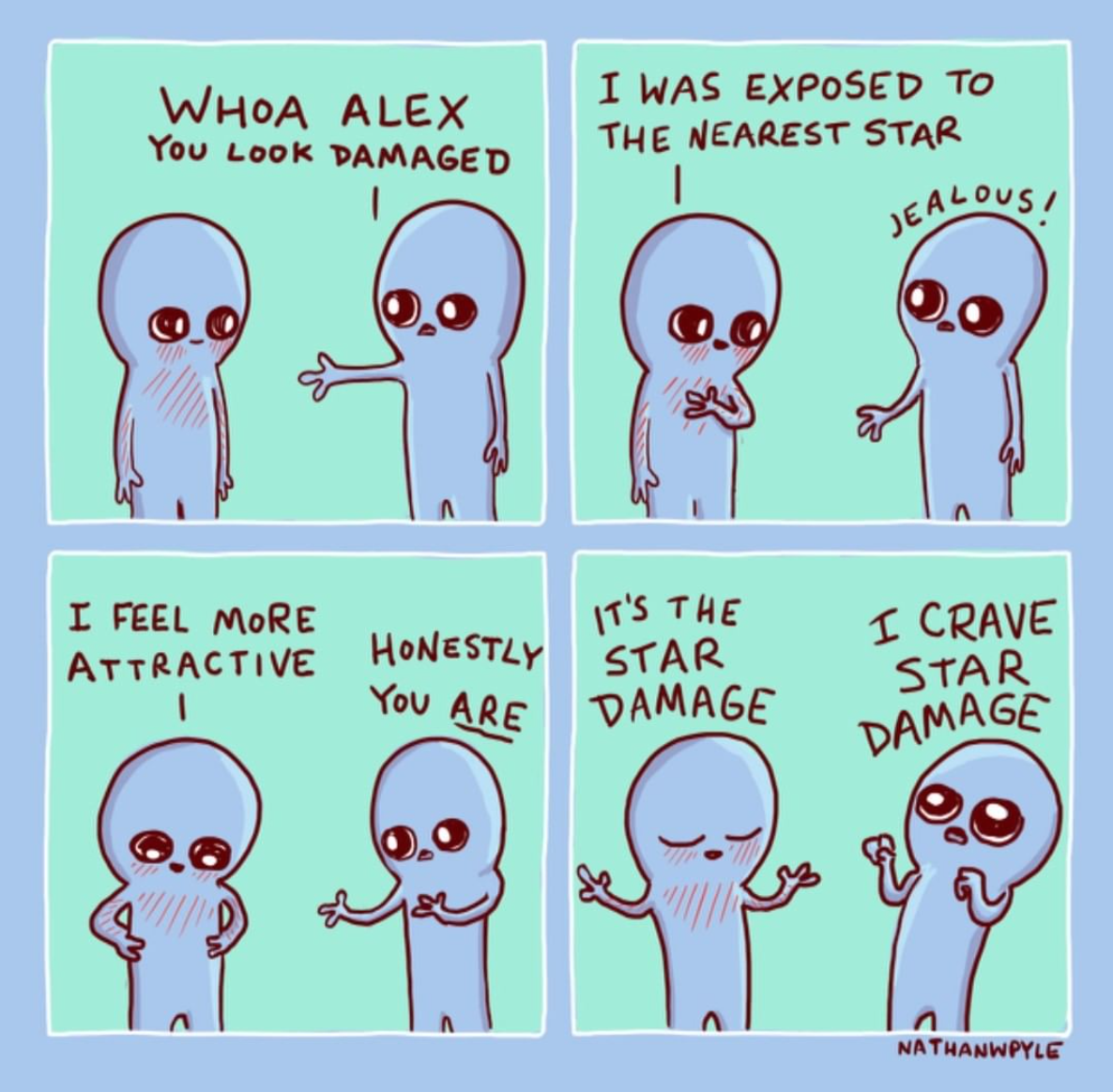
For example, in one of his very well-known web comics (see figure 1), two Strange Planet characters are talking about being sunburned. The one character uses the word “damaged” to describe the other. By using this dyslogistic language to describe sunburn, the character acknowledges the danger of sunburn. However, Pyle then switches the tone of the comic by having the sunburned character describe themselves as “more attractive”. After using this eulogistic language, the comic repeats the idea of damage, illustrating how the use of both types of language can present a new way of seeing something. The comic ends with the non-sunburned character saying “I crave star damage”, which illustrates both the negative and positive aspects of being sunburned.
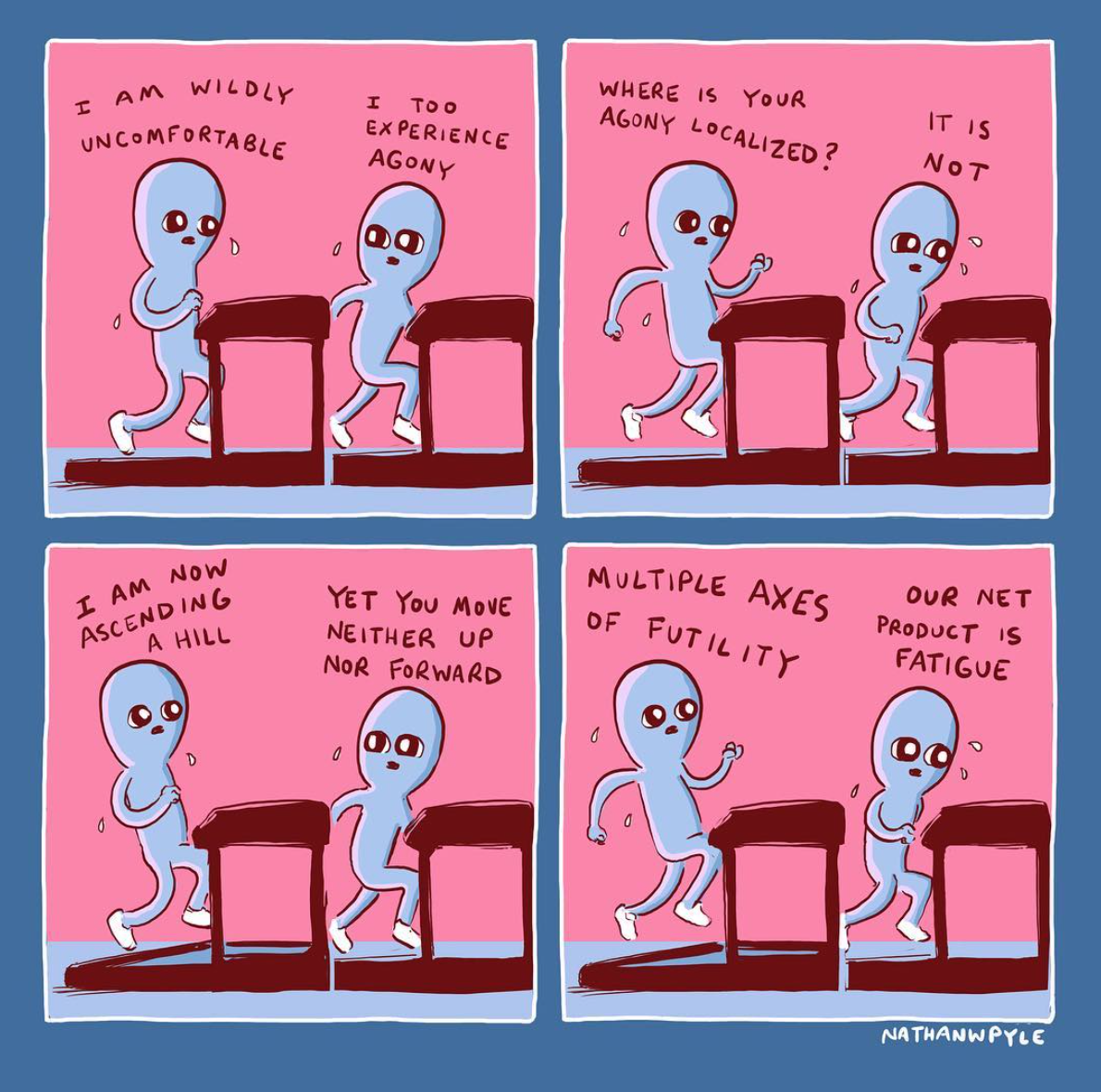
In another one of his web comics (see figure 2), Pyle illustrates two Strange Planet characters conversing as they exercise. In contrast to the previous example, Pyle consistently has the characters utilize dyslogistic language including references to being “wildly uncomfortable”, experiencing “agony”, “multiple axes of futility”, and a “net product of fatigue”. In doing so, he draws attention to the less favorable aspects of exercise and comedically illustrates how characters continue to do it even after they understand how supposedly futile it is.
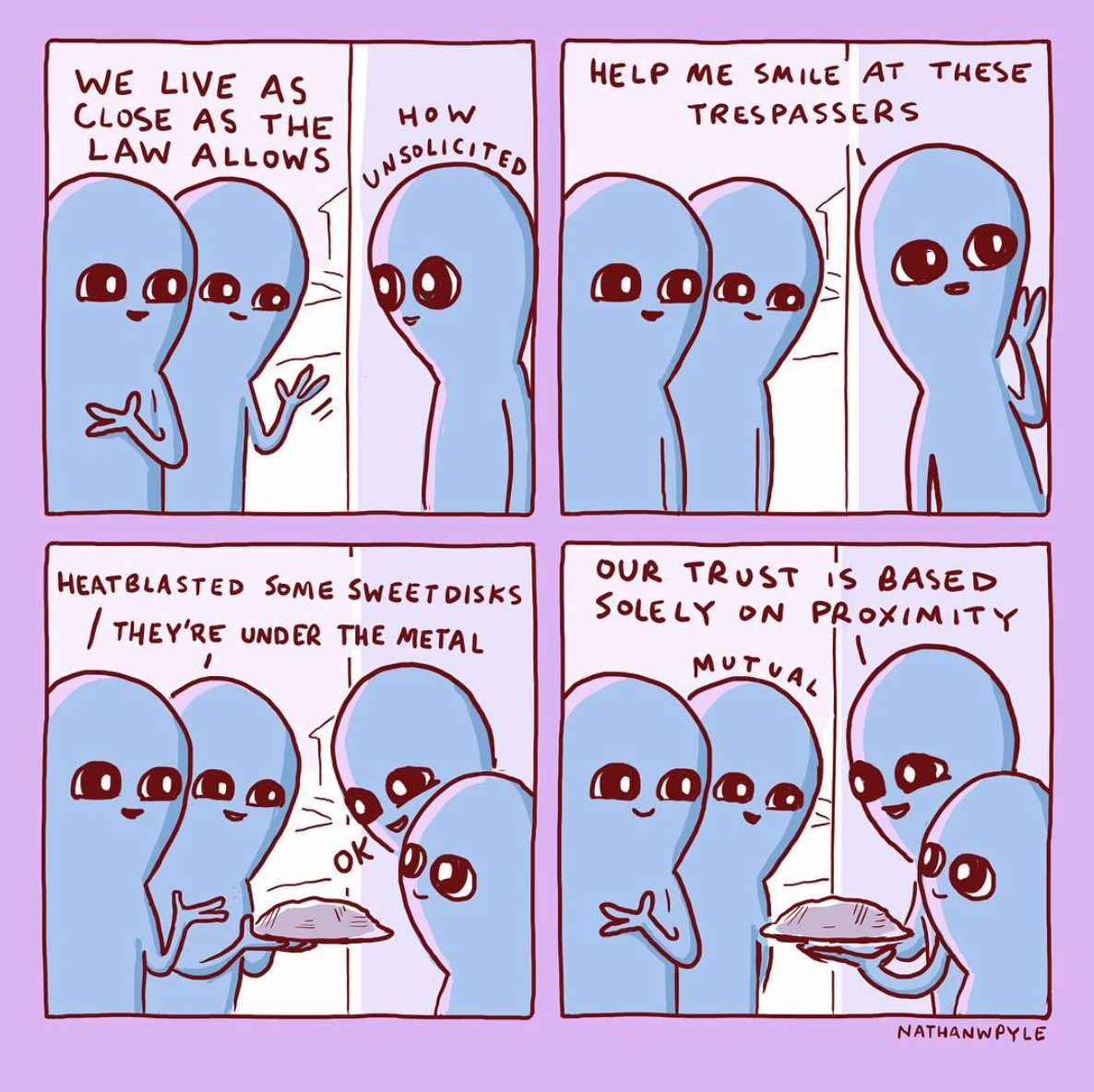
Pyle brings up this point again in another of his web comics (see figure 3) that looks at the relationships between neighbors and the way that those relationships often go unquestioned because of how society is set up. Again, the characters use dyslogistic language by using phrases such as “unsolicited”, “trespassers”, and “trust based solely on proximity”. Pyle also reveals how comedic the situation is by referring to smiling and the practice of bringing food to neighbors as a gesture of trust. This causes the audience to see the situation in a new, yet funny light, while also helping them to think about the ways these actions actually appear.
To see more of Nathan Pyle’s Strange Planet web comic series, check out his Instagram page here.




 Notes in the Margins